


You type the word, pause, and squint at it. Does the middle have a D or a T? Even if your spell-checker stays quiet, the doubt is hard to shake, especially when the word is headed for a school form or an email to a teacher.
This guide settles kindergarten or kindergarden in under a minute. Then it shows why the wrong version feels so natural, where the word really comes from, and how to lock in the right spelling for good.
Kindergarten or Kindergarden – Quick Answer
Kindergarten or kindergarden? The correct spelling is kindergarten, with a T. “Kindergarden” is a common misspelling, not an accepted variant.
- ✅ Correct: My son starts kindergarten in September.
- ❌ Incorrect: My son starts kindergarden in September.
Why the T? English borrowed the word straight from German, where garten means “garden.” The spelling never got “Englished,” and it hasn’t changed since.
The Origin of Kindergarten or Kindergarden
Here’s the odd part. Garten looks like a slip of the finger, yet that’s exactly how the German word is spelled.
German educator Friedrich Fröbel opened a play-and-activity school for young children in Bad Blankenburg in 1837. In 1840 he renamed it Kindergarten. The name joins Kinder (“children”) and Garten (“garden”), so it literally means “children’s garden.”
Fröbel chose the image on purpose. He saw young children as something like seedlings: they need care, good conditions, and room to grow at their own pace.
English speakers picked up the term in the mid-19th century and took it in untranslated. Merriam-Webster traces it directly to the German kindergarten, built from kinder and garten. Oxford gives the same origin. Nobody ever swapped in the English “garden,” and that’s why the T is still there.
British English vs American English Spelling
Many British and American spellings split apart, like colour and color. This word isn’t one of them. Kindergarten is spelled the same everywhere English is written.
What changes from country to country is the meaning:
| Region | Spelling | What it usually refers to |
| United States | kindergarten | A class for children around age five, often the first year of school |
| United Kingdom | kindergarten | A school for children under five, similar to a nursery school |
| England and Wales | kindergarten (informal) | The closest official stage is called reception |
| Australia | kindergarten | Early schooling before Year 1, often shortened to kinder or kindy |
So if a British parent says “kindergarten,” they may mean something younger than what an American means. The spelling, though, never budges.
You’ll also see pre-kindergarten (or Pre-K) in the US. That’s the stage before kindergarten, and it keeps the same T.
Which Spelling Should You Use?
Picture an enrollment form with a blank line marked “Grade.” You write the word, and your pen hovers. Use kindergarten. Every time.
Kindergarten is a noun. It names the school or class where children begin formal learning, usually around age five. It also works right before another noun, as in kindergarten teacher or kindergarten classroom.
Nothing about the kindergarten or kindergarden question changes with the setting. Use the T spelling in:
- School forms and official paperwork
- Lesson plans and classroom materials
- Blog posts, newsletters, and website copy
- Emails, texts, and social media captions
A few small style points help too. Keep it lowercase mid-sentence. Capitalize it at the start of a sentence or in a proper name, like “Maple Street Kindergarten.” Some writers shorten it to a capital K, as in “K–12.”
Here are more examples of the right spelling in action:
- She has taught kindergarten for twelve years.
- The kindergarten curriculum leans on play, music, and early reading.
- Is there a kindergarten near our new house?
A Simple Trick to Remember the Correct Spelling
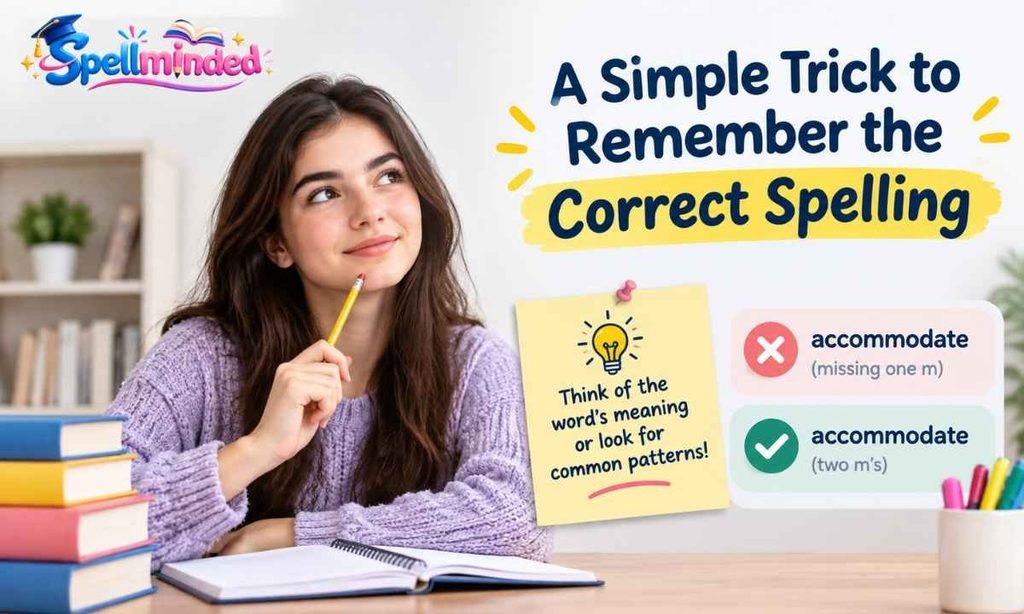
Look inside the word: kindergarten.
Right there in the middle, the word art is hiding. Think of paint-stained smocks, glitter, and glue sticks. That’s kindergarten. Now check the wrong spelling. Garden has no art in it.
Next time you hesitate, picture a child’s painting taped to a classroom wall. The T stays because the art stays.
Common Mistakes with Kindergarten
So why does the D sneak in so easily? Two things push it there.
First, sound. Many speakers say the ending closer to “garden,” and Merriam-Webster even lists a variant pronunciation with a D-like sound. Second, habit. You’ve typed garden a thousand times, but you’ve probably typed garten almost never.
The result is a half-translated word: German kinder on the front and English garden on the back. Wikipedia describes the error in exactly those terms.
Here are the slips you’ll see most often:
| Wrong form | Right form | What went wrong |
| kindergarden | kindergarten | The English word “garden” takes over |
| kindergardener | kindergartener | The same D error carries into the noun |
| kindergardner | kindergartner | Same error, shorter noun form |
| kindergaten | kindergarten | The R after “ga” gets dropped |
| kindergarte | kindergarten | The final N goes missing |
| kindegarten | kindergarten | The R after “kinde” gets dropped |
The plural is simply kindergartens, with the same T.
Quick proofreading tip: Press Ctrl+F (or Cmd+F on a Mac) and search your document for “kindergard.” Every hit is a typo. The correct spelling never contains that string.
Kindergarten – Google Trends & Usage Data
Search tools like Google Trends can show how often people look a word up. The sharper signal here, though, comes from misspelling data.
Ginger Software tracks common misspellings for this word. According to its data, “kindergarden” accounts for roughly 67% of the errors logged. The next most common slips, “kindergaten” and “kindergarte,” each sit at just over 2%.
That pattern tells you something useful. Most people who get this word wrong get it wrong the same way: they swap the T for a D. It isn’t a case of two spellings competing for acceptance. It’s one predictable habit.
Usage on the “correct” side is just as lopsided. The dictionaries covered above list only the T spelling, and the current news examples on Merriam-Webster’s page use it too. The kindergarten or kindergarden mix-up is a search-and-verify problem, not a real usage debate.
Comparison Table – Keyword Variations
| Form | Status | What to know |
| kindergarten | Correct | The standard spelling in every English-speaking region |
| kindergarden | Misspelling | Avoid it. It isn’t a valid variant. |
| kindergartens | Correct | The plural of the school or class |
| kindergartner | Correct | Merriam-Webster’s main entry for a child in kindergarten |
| kindergartener | Correct | An accepted variant. Oxford lists it as its headword. |
| pre-kindergarten / Pre-K | Correct | The stage before kindergarten |
| kindergarten teacher | Correct | A compound noun, written in lowercase |
| K | Correct | A capital-K shorthand, as in “K–12” |
Frequently Asked Questions
Is “kindergarden” ever correct?
No. It’s a common misspelling in every variety of English. Write kindergarten instead.
Why is it kindergarten and not kindergarden?
English borrowed the word from German without changing it. Garten is the German word for “garden,” and the spelling stuck.
How do you pronounce kindergarten?
Most people say it as KIN-der-gar-tn. Some speakers make the ending sound closer to “garden,” which is exactly why the D creeps into spelling. Say it either way, but write it with a T.
What’s an easy way to remember the spelling?
Look for the word art hiding inside kindergarten. Kindergarten classrooms are full of paint and glue, and garden has no art in it.
Is it kindergartner or kindergartener?
Both are accepted for a child in kindergarten. Merriam-Webster lists kindergartner first, while Oxford lists kindergartener as its headword. Pick one and stay consistent.
Conclusion
The answer to kindergarten or kindergarden is simple: it’s kindergarten, with a T. The word comes straight from German (Kinder plus Garten), and English kept that spelling intact. “Kindergarden” is a common misspelling, and no major dictionary treats it as valid.
Next time you’re unsure, remember the art hiding in kindergarten. Then give any school form or email one quick spell-check before you hit send.