


You’re typing a quick message about cleaning up, and your thumb stops over the send button. “I sweeped the floor” looks a little off. But “swept” looks odd too. It happens to everyone.
This guide settles sweeped or swept in plain English. You’ll get the right form, the reason the wrong one feels natural, and a simple trick to remember it.
Quick Answer
Sweeped or Swept? The correct form is “swept.” It’s both the past tense and the past participle of “sweep.” “Sweeped” is a common mistake, and standard dictionaries don’t list it.
- ✅ Correct: I swept the floor.
- ✅ Correct: The floor has been swept.
- ❌ Incorrect: I sweeped the floor.
Simple Background
“Sweep” is an irregular verb. That means it doesn’t follow the usual rule of adding “-ed” for the past tense.
Most English verbs do follow that rule. You walk, then you walked. You clean, then you cleaned. So your brain naturally guesses that sweep becomes sweeped. It’s a logical guess, just not the right one.
“Sweep” goes back to Middle English, and it kept its own past form instead of taking “-ed.” Plenty of other everyday verbs did the same, like keep and sleep.
Clear Explanation of the Difference
Sweeped or swept comes down to one simple fact: one is a real form, and one isn’t.
Swept
“Swept” is the past tense and the past participle of “sweep.” Merriam-Webster lists it that way. It records “swept” as the past tense and past participle of “sweep.”
It covers two main ideas:
- Cleaning with a broom or brush: She swept the porch.
- Moving swiftly or with force: The wind swept across the field.
Sweeped
“Sweeped” has no meaning of its own. It’s what you get when the regular “-ed” rule gets stretched onto an irregular verb.
If someone writes it, readers will still understand the idea. They’ll also notice the slip, so it’s worth avoiding.
Comparison Table
Here’s the sweeped or swept question in one quick table.
| Verb form | Correct | Nonstandard (avoid) |
| Present | sweep / sweeps | — |
| Past tense | swept | sweeped |
| Past participle | (has/have/had) swept | (has/have/had) sweeped |
| -ing form | sweeping | — |
The pattern is easy to spot. Whenever you need a past form, “swept” is the only one that works.
Which One to Use and When

Use “swept” for the past tense
Use “swept” when the action is finished and you’re describing it directly. Time words like yesterday, last night, and earlier are good clues.
Yesterday, I swept the garage.
Use “swept” as the past participle
Use “swept” after helper words like have, has, had, was, and were.
The street has been swept. She had swept the room before they arrived.
Never use “sweeped”
There’s no exception here. It’s wrong in emails, essays, texts, and speeches. It isn’t a British or American difference either. Both use “swept.”
Common Mistakes People Make
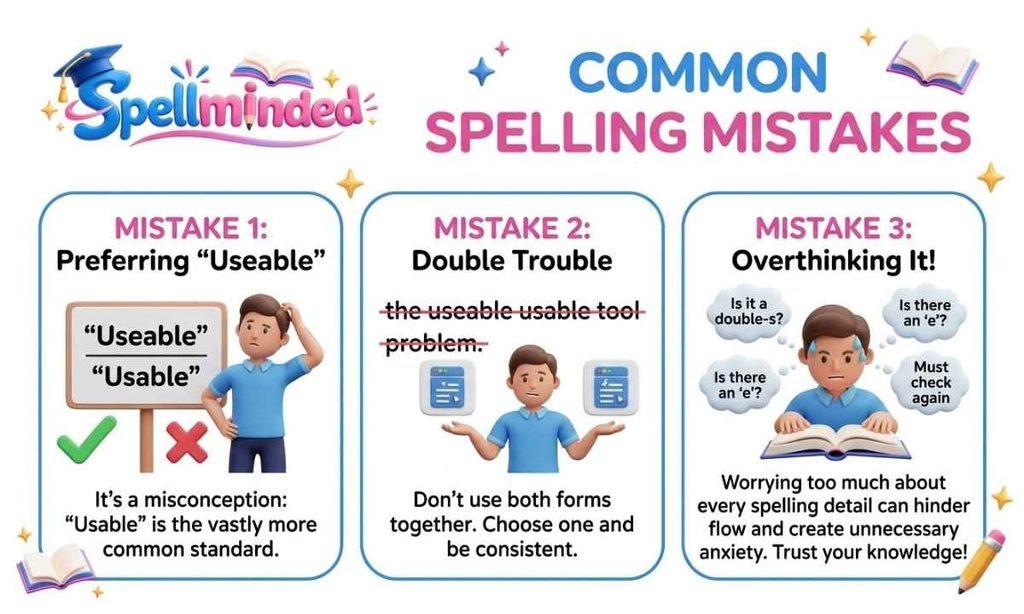
Most sweeped or swept errors come from one habit: adding “-ed” without thinking. Here are the four slips you’ll see most.
Mistake 1: Adding “-ed” Automatically
- ❌ I sweeped the kitchen.
- ✅ I swept the kitchen.
The “-ed” rule works for most verbs. It just doesn’t work for this one.
Mistake 2: Mixing Regular and Irregular Forms
Regular verbs like walk add “-ed.” Irregular verbs like sweep change in their own way. Writers sometimes mix the two in one sentence.
- ❌ She swept the hall and then sweeped the stairs.
- ✅ She swept the hall and then swept the stairs.
Mistake 3: Using “Sweeped” in Formal Writing
A reader may forgive it in a casual text. In a report, a school essay, or a work email, it looks like an error. Stick with “swept” everywhere and you never have to think about it.
Mistake 4: Using the Wrong Past Participle
- ❌ The floor was sweeped this morning.
- ✅ The floor was swept this morning.
The participle is the same word as the past tense. That makes it easier to remember.
Everyday Real Life Examples

Here’s “swept” in six real-life settings.
In Emails
Thanks for waiting. I swept my inbox and found your invoice.
In News Reports
A storm swept through the coastal town overnight.
On Social Media
Just swept the whole garage. My arms are done.
At Home
Mom swept the kitchen before the guests arrived.
At School
The class swept the playground after the picnic.
In Sports
The team swept the series in four games.
Short Learning Section for Students and Beginners

If sweeped or swept still trips you up, this short section will help.
Simple Pattern
Only three forms matter:
- Present: sweep
- Past: swept
- Past participle: swept
The last two are identical. You only have to learn one new word.
Memory Trick
Think of the “-ept” family. These verbs all shrink their double “e” into a single short “e” and add a “t”:
- keep → kept
- sleep → slept
- creep → crept
- weep → wept
- sweep → swept
Nobody says “sleeped” or “keeped.” If those sound wrong to you, “sweeped” is wrong for the same reason.
Practice Exercise
Fix the mistake in each sentence:
- She sweeped the porch.
- The leaves were sweeped away.
- We sweeped the gym after practice.
Fill in the Blank
Choose the correct form of “sweep”:
- Yesterday, he ___ the garage.
- The hall has been ___ twice today.
- A cold wind ___ across the field.
Answers: Practice Exercise: 1. swept, 2. swept, 3. swept. Fill in the Blank: 1. swept, 2. swept, 3. swept.
Frequently Asked Questions
Sweeped or Swept: Which Is Correct?
“Swept” is correct. I swept the floor is right, and I sweeped the floor isn’t. “Sweep” is an irregular verb, so it doesn’t take “-ed.”
Is “Sweeped” Ever Correct?
No. It isn’t a standard dictionary word, so it isn’t correct in writing. Some people slip into it when speaking, because the “-ed” habit is strong. It’s still an error.
What Is the Past Participle of Sweep?
It’s “swept.” Use it after have, has, had, was, or were. For example: The street has been swept.
How Do I Remember the Correct Form?
Link it to keep/kept and sleep/slept. Sweep/swept follows the same pattern. If “sleeped” sounds wrong, “sweeped” should sound wrong too.
Can “Swept” Be Used Outside Cleaning?
Yes. It can mean moving swiftly (The fire swept through the hills), winning every game (They swept the series), or searching a place (Police swept the room for bugs).
Conclusion
With sweeped or swept, the answer never changes. “Swept” is the correct past tense and the correct past participle of “sweep.” “Sweeped” is a common mistake.
It’s an easy one to make, since most past tenses end in “-ed.” Just remember the “-ept” family (keep/kept, sleep/slept, sweep/swept), and you’ll pick the right word every time.